

What Is the Difference in Wildlife Interaction Between the 4-Hour Gorilla Habituation Experience and a Standard 1-Hour Gorilla Trek?
Watching a mountain gorilla emerge silently from the dense rainforest is one of Africa's greatest wildlife moments. But Uganda offers two distinct ways to experience these remarkable primates. The first is the classic one-hour gorilla trek, the experience most travelers know. The second is the Gorilla Habituation Experience, an exclusive activity found only in the Rushaga sector of Bwindi Impenetrable National Park. Although both involve mountain gorillas, they deliver very different experiences. The difference is not simply the amount of time spent with the animals it is the nature of the interaction, the level of observation, and the insight you gain into gorilla behaviour. At Savannah Explore Africa, we help guests choose the option that best matches their interests, fitness, photography goals, and travel budget. This guide explains how the two experiences compare and who each is best suited for.
The biggest difference between the Gorilla Habituation Experience and a standard gorilla trek is the depth of wildlife interaction. A standard gorilla trek allows visitors to spend one hour with a fully habituated gorilla family after tracking them through Bwindi Impenetrable National Park. The Gorilla Habituation Experience, available only in Rushaga Sector, allows visitors to spend up to four hours with a semi-habituated gorilla family while accompanying researchers, trackers, veterinarians, and Uganda Wildlife Authority rangers during the final stages of the habituation process. If your priority is a once-in-a-lifetime gorilla encounter, the standard trek is exceptional. If you are a wildlife photographer, filmmaker, conservation enthusiast, or someone who wants to understand gorilla behaviour in greater depth, the Gorilla Habituation Experience offers a level of immersion that few wildlife experiences in the world can match.
What Is the Difference in Wildlife Interaction Between the 4-Hour
Gorilla Habituation Experience and a Standard 1-Hour Gorilla Trek?
Watching a 400-pound wild mountain silverback gorilla emerge silently from the ancient, mist-draped Afro-montane canopy of Uganda's Bwindi Impenetrable National Park is an emotional, life-altering milestone. Yet, discerning travellers organising an elite itinerary soon discover that the Uganda Wildlife Authority (UWA) offers two vastly different ways to step into this prehistoric wilderness. The first is the classic one-hour gorilla trek the iconic wildlife encounter recognised worldwide. The second is the hyper exclusive Gorilla Habituation Experience (GHEX), a premium conservation excursion conducted solely within the rugged valleys of the park’s southern Rushaga sector.
When evaluating these options, many luxury travel brochures make a superficial mistake: they imply that the only true difference is time. But for the serious wildlife enthusiast, conservation purist, or professional photographer, time is merely the baseline variable. The true divergence lies in the raw nature of the wildlife interaction, the underlying primate psychology, the group dynamics, and the level of proximity to un-manipulated animal behaviour. At Savannah Explore Africa, we don’t believe in surface level travel summaries. Below is our definitive, operationally rigorous guide comparing the deep structural differences between these two world-class primate encounters
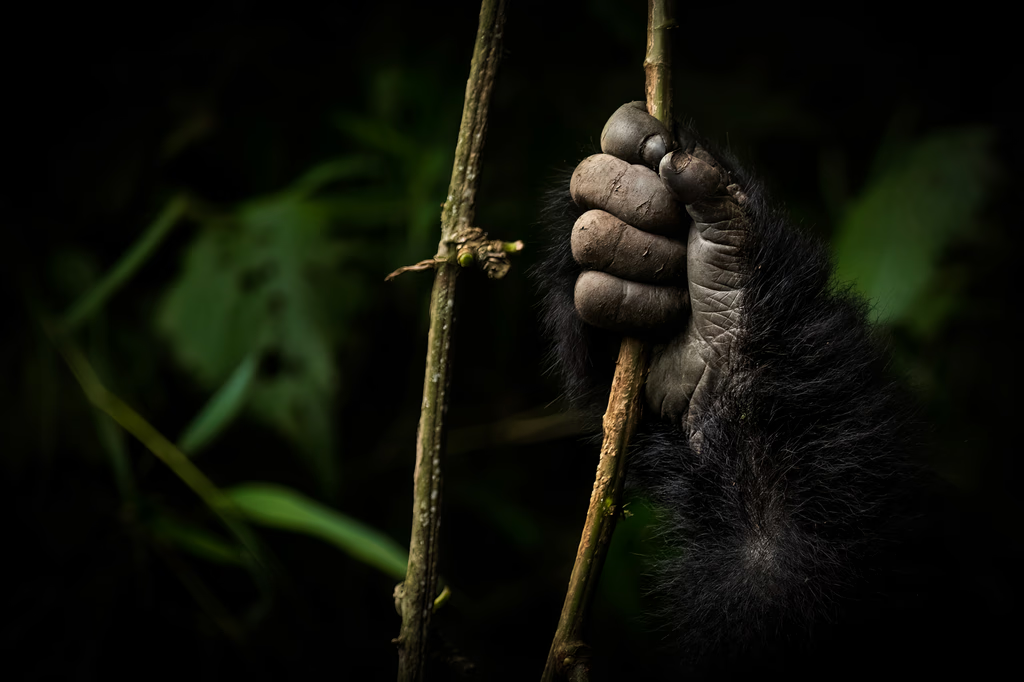
Understanding Gorilla Habituation
Before comparing the experiences, it helps to understand what "habituation" means.
Mountain gorillas are naturally wary of humans. Habituation is the gradual process of helping a wild gorilla family become comfortable with the presence of researchers and carefully managed tourism.
This process can take two to three years and is carried out by trained teams from the Uganda Wildlife Authority, researchers, veterinarians, and trackers.
Only after a family is fully habituated is it opened to standard tourism.
The Gorilla Habituation Experience gives visitors a rare opportunity to witness this final stage.
Wildlife Interaction: The Biggest Difference
A standard gorilla trek focuses on observation.
Once the gorilla family is located, visitors quietly watch natural behaviours such as feeding, grooming, resting, and caring for young before leaving after one hour.
The Gorilla Habituation Experience is far more immersive.
Visitors spend up to four hours with a gorilla family that is still becoming accustomed to human presence. During this time, you observe how trackers locate the family, how researchers identify individual gorillas, and how rangers monitor behaviour while maintaining a safe and respectful distance.
Rather than simply watching gorillas, you become part of the conservation process.
Side-by-Side Operational Comparison Matrix
To help you visualise how these two premium tracking formats operate under field constraints, Savannah Explore Africa has itemised the exact core variables:
Structural Planning Variable | Standard 1-Hour Gorilla Trek | Gorilla Habituation Experience (GHEX) |
|---|---|---|
Protected Window with Primates | Exactly 1 Hour (60-minute hard cap) | Up to 4 Hours (Calculated from contact) |
Geographical Availability | Bwindi (All 4 Sectors) & Mgahinga National Park | Rushaga Sector strictly (Southern Bwindi) |
Primate Psychological Classification | Fully Habituated (100% human-tolerant) | Semi-Habituated (Active learning phase) |
Maximum Daily Tourist Group Size | Capped at 8 Visitors per family | Restricted to 4 Visitors per family |
UWA Permit Financial Investment | $800 USD flat (Non-refundable) | $1,500 USD flat (Non-refundable) |
Airstrip & Logistical Gateway | Kihihi Airstrip (North) or Kisoro Airstrip (South) | Kisoro Airstrip strictly (90-min overland transfer) |
Primary Traveller Objective | Classic bucket-list viewing & checking off milestone | Serious photography, conservation science, intimacy |
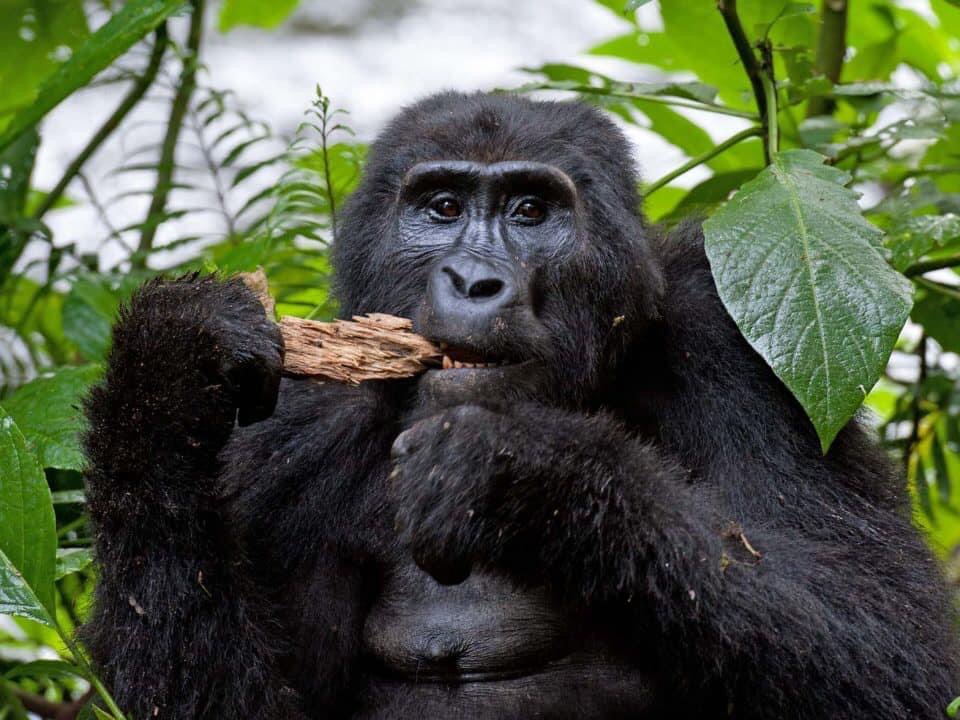
Deep-Dive behavioural Analysis: Observation vs. Active Conditioning
To choose the perfect permit for your safari, you must understand the behavioural mechanics of habituation the scientific process of easing a wild primate family into tolerating human presence without altering their natural survival instincts.
[Phase 1: Totally Wild Troop] ➔ Flee or charge instantly upon human sight/scent.
                                       │
                                       ▼ (1-2 Years of Daily Researcher Tracking)
[Phase 2: Semi-Habituated Troop] ➔ The GHEX Realm: Active testing, vocalisations, mock charges.
                                       │
                                       ▼ (Final Assessment & Pass)
[Phase 3: Fully Habituated Troop] ➔ Standard Safari Realm: 100% passive, complete human disregard.
1. The Standard Trek Interaction: Passive Disregard
When you approach a fully habituated gorilla family (such as the Mubare or Rushegura groups), you are witnessing the result of three years of intense daily field conditioning. To these gorillas, humans are effectively invisible, non-threatening components of the landscape.
Primate Response: The silverback will frequently stay asleep or continue stripping wild celery stalks right beside the trail. Mothers will un-defensively allow black backs and juveniles to wrestle within meters of your tracking line. It is a peaceful, predictable, and highly safe window focused entirely on passive observation.
2. The Habituation Experience Interaction: Dynamic Primate Psychology
During a GHEX excursion in Rushaga, you are stepping directly into a living laboratory. The semi-habituated family is still actively evaluating human presence. They know who the regular UWA researchers are, but they are processing your new shapes, scents, and movements.
Primate Response: The interaction is profoundly dynamic and beautifully raw. The dominant silverback may assert his leadership by emitting low, territorial throat gurgles or executing defensive, dramatic mock charges thumping his chest and slapping branches to test the group's resolve.
The Researcher Synergy: You do not stand still in a quiet line. You move with the researchers. When the silverback moves, the researchers read his posture, emit guttural "glop" sounds to vocalise peace, and instruct you when to kneel, drop eye contact, or push through the undergrowth to maintain tracking continuity. You are an active catalyst in the family's journey toward permanent conservation safety.
Technical Photography & Film making Physics under the Canopy
For serious wildlife photographers and cinematic documentarians, the structural differences between these two permits completely dictate your final portfolio success.
1. The 60-Minute Pressure Cooker
On a standard trek, your 60-minute clock ticks down relentlessly. Bwindi’s multi-layered canopy continuously shifts, filtering out up to 80% of natural sunlight. If your assigned family is huddled in a dark, hyper-dense ravine of thick secondary vine undergrowth, you spend your entire hour battling extreme exposure contrast, low-light grain, and branches cutting across your frame. There is zero time to swap focal lengths or wait for the light to shift.
2. The 4-Hour Photographic Canvas
The Gorilla Habituation Experience entirely eliminates this artistic panic. Over a continuous 240-minute window, you can map out a masterful portfolio:
Adapting to Light Dynamics: As the sun moves across the Kigezi Highlands sky, the lighting conditions inside the forest shift. A dark ravine at 9:00 AM can become an ethereal, mist-draped cathedral of light by 11:30 AM, letting you capture razor-sharp portraits at lower ISO thresholds.
Capturing Narrative Continuity: Spending four hours allows you to capture an entire behavioural story arc. You will document the morning feeding frenzy, the subsequent group mid-day nest-building, the intimate grooming rituals, and the explosive play sequences of the juveniles as the troop relaxes around the researchers. Furthermore, because the group size is capped at just 4 tourists, you never have to compete for clear angles or shield other travellers from blocking your field of view.
The Savannah Explore Africa Elite Field Protocol
When you book a premium primate package with our team, our concierge and expert safari guides execute an intricate tracking protocol behind the scenes to optimise your physical safety and comfort:
1. The Ultimate Multi-Day Sequencing Strategy
For true primate connoisseurs, Savannah Explore Africa highly recommends our signature "Primate Continuity Double-Trek." We structure your Uganda itinerary with a standard 1-hour gorilla trek on Day 1 (often in the lower-altitude Buhoma sector) to familiarise your body with forest locomotion and secure your foundational bucket-list shots. On Day 2, we fly or transfer you south to Rushaga for the 4-hour Habituation Experience. Experiencing both back-to-back provides an unparalleled comparative understanding of primate evolution and conservation science.
2. Physical and Biomechanical Pacing
The 4-hour habituation window does not begin at the trail head; it starts the exact minute the trackers make vocal contact with the gorillas. This means a habituation day demands higher stamina. Because semi-habituated troops move faster and cover more territory than fully habituated families, you will be actively hiking through off-trail, machete-cleared terrain for a longer period.
Our team manages this by outfitting you with dual ergonomic trekking poles, assigning two personal porters per client to completely manage your heavy telephoto camera bags, and keeping your transmission pacing slow, steady, and perfectly aligned with your body's capabilities.
Frequently Asked Questions
Why is the Gorilla Habituation permit so limited in availability?
To protect the emotional well-being and health of the semi-habituated primates, the Uganda Wildlife Authority issues only 4 habituation permits per family per day. Because there are typically only two wild families undergoing habituation in the Rushaga sector at any given time, only 8 total permits exist daily for the entire world. These coveted spaces regularly sell out 8 to 12 months in advance, making early reservation through Savannah Explore Africa completely mandatory.
What is the strict minimum age limit for the Habituation Experience?
In complete alignment with standard trekking regulations, the minimum age requirement for the Gorilla Habituation Experience is strictly capped at 15 years old. This rule is uncompromising across all sectors of Bwindi to protect mountain gorillas who share roughly 98% of human DNA from common human childhood illnesses and respiratory pathogens to which they possess zero natural immunity.
Can I use a flash or continuous LED lighting panels for video tracking?
No. All forms of artificial lighting including camera flashes, continuous LED panels, and phone lights are strictly illegal within Bwindi Impenetrable National Park. Sudden artificial illumination can be interpreted by a semi-habituated silverback as an aggressive threat, potentially triggering an immediate defensive charge toward the research group. All media must be captured using ambient forest light, requiring professional dual-body cameras with excellent low-light performance.
Master the Mist of Bwindi with Savannah Explore Africa
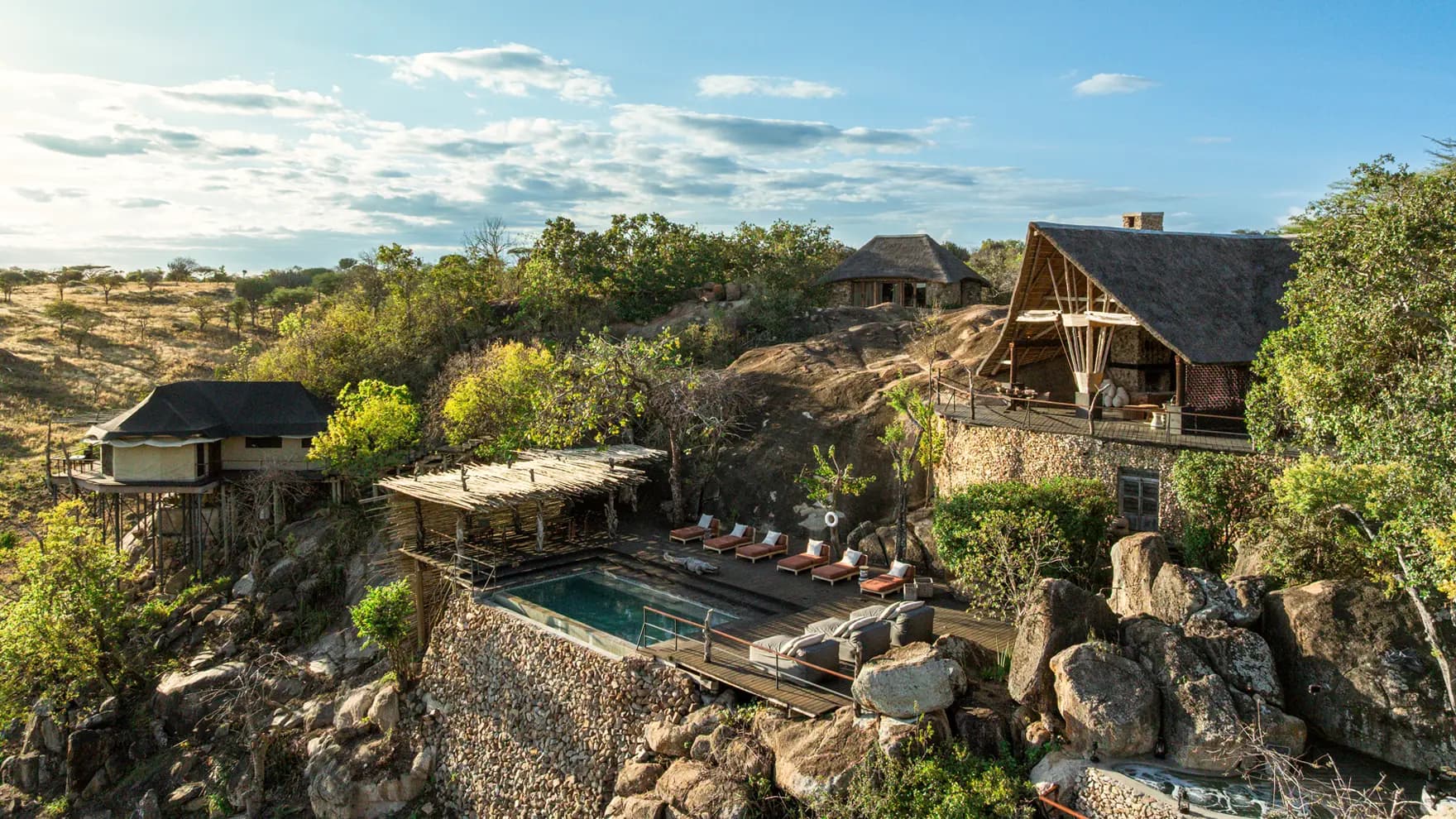
Choosing between a standard 1-hour trek and the immersive 4-hour Habituation Experience is a choice between exceptional observation and true scientific immersion. At Savannah Explore Africa, we ensure your selection is fully insulated by premium logistics, elite local trackers, and the finest luxury eco-lodges in southwestern Uganda.
Let our travel designers engineer a flawless primate masterclass that handles every variable—from explicit permit acquisitions to private Cessna Caravan aviation charters—so you can step onto the ancient forest floor with absolute confidence.
Contact the Luxury Safari Designers at Savannah Explore Africa today to secure your exclusive 2026/2027 Habituation permits.
Begin Your Journey
Your story starts
in East Africa.
Tell us your dates, your dream, and how you like to travel. We will design something extraordinary, only for you.