

Can I Combine Gorilla Trekking With Other African Safaris?
For the definitive wildlife collector, pairing the quiet, deeply emotional experience of standing face-to-face with a 400-pound mountain silverback gorilla with the high-octane drama of a classic big-game savannah safari is the ultimate travel milestone. Yet, when you look at an African map, the geographical distance between the dense, high-altitude rain-forests of East Africa and the endless plains of the Serengeti or the private game reserves of Southern Africa can trigger immediate operational anxiety. The logistical hurdles are massive: complex multi-sector flight paths, varying regional entry visa protocols, and conflicting seasonal weather charts can easily compromise an un-vetted itinerary
Yes, you can seamlessly combine gorilla trekking with other African safaris, provided you design your itinerary around a Fly-In Safari model using private or regional aviation networks. The single most popular and ecologically diverse combination is pairing a Great Migration safari in Kenya’s Maasai Mara or Tanzania's Serengeti with a gorilla trek in Rwanda’s Volcanoes National Park or Uganda's Bwindi Impenetrable Forest, utilising the convenient East Africa Tourist Visa for seamless border transits.
Can I Combine Gorilla Trekking
With Other African Safaris?
The Definitive Guide for 2026
Aviation Routing · Visa Frameworks · Seasonal Planning · The Best Combinations Expertly Designed
Updated June 2026 ◆ Uganda · Rwanda · Kenya · Tanzania · South Africa · Zanzibar
For the serious wildlife traveler, the question is not whether to combine gorilla trekking with a savannah safari. It is how to do it without turning what should be one of the finest journeys of your life into an exhausting sequence of airport lounges, missed connections, and nights in transit hotels.
The geography of East Africa is, in this respect, on your side. The mountain gorilla sanctuaries of Uganda and Rwanda sit within a few hours' flying time of Kenya's Maasai Mara, Tanzania's Serengeti, and the volcanic landscapes of Ngorongoro. The contrast between these ecosystems is extraordinary: one morning you are moving on foot through ancient, mist-draped rainforest toward a family of mountain gorillas; three days later you are watching a cheetah sprint across an open Kenyan plain from the roof of a Land Cruiser. These are not merely different wildlife experiences they are different worlds. And a well-designed itinerary gives you both.
At Savannah Explore Africa, we plan multi-country East African journeys by looking at the entire route as a single coherent experience rather than a collection of destinations bolted together. A well designed combination minimizes backtracking, uses regional aviation intelligently, aligns with the right seasonal windows, and gives you enough time in each destination to actually be present rather than merely passing through.
This guide covers every dimension of multi-country gorilla safari planning the best combinations, the aviation routes, the visa frameworks, the seasonal sweet spots, and the three planning rules that prevent the most common and expensive multi-destination mistakes.
"A great multi-country safari does not feel like several trips stitched together. It feels like one extraordinary journey with each chapter deepening what came before."
Quick Reference: The Best Gorilla Safari Combinations
Gorilla Base | Best Companion | Ideal Duration | Optimal Season |
|---|---|---|---|
Uganda (Bwindi) | Kenya — Maasai Mara | 10–14 days | Jul–Oct (Migration crossings) |
Uganda (Bwindi) | Tanzania — Serengeti + Ngorongoro | 12–16 days | Dec–Feb (Calving) or Jul–Oct |
Uganda (Bwindi) | Tanzania + Zanzibar | 14–18 days | Jun–Sep (Dry season) |
Uganda (Bwindi) | Uganda Circuit (Kibale + Queen Elizabeth) | 8–12 days | Year-round |
Rwanda (Volcanoes NP) | Kenya — Maasai Mara | 9–14 days | Jul–Oct (Migration crossings) |
Rwanda (Volcanoes NP) | Tanzania — Serengeti + Zanzibar | 10–15 days | Jun–Sep |
Rwanda (Volcanoes NP) | South Africa — Sabi Sand | 10–14 days | Jun–Aug (Dry winter game viewing) |
Uganda + Rwanda | Kenya or Tanzania extension | 14–21 days | Jul–Sep |
|---|
Why Combine Gorilla Trekking With Another Safari?
Gorilla trekking and a traditional savannah safari are, experientially, as different from each other as any two wildlife encounters on earth can be. This is precisely what makes combining them so compelling and so rewarding.
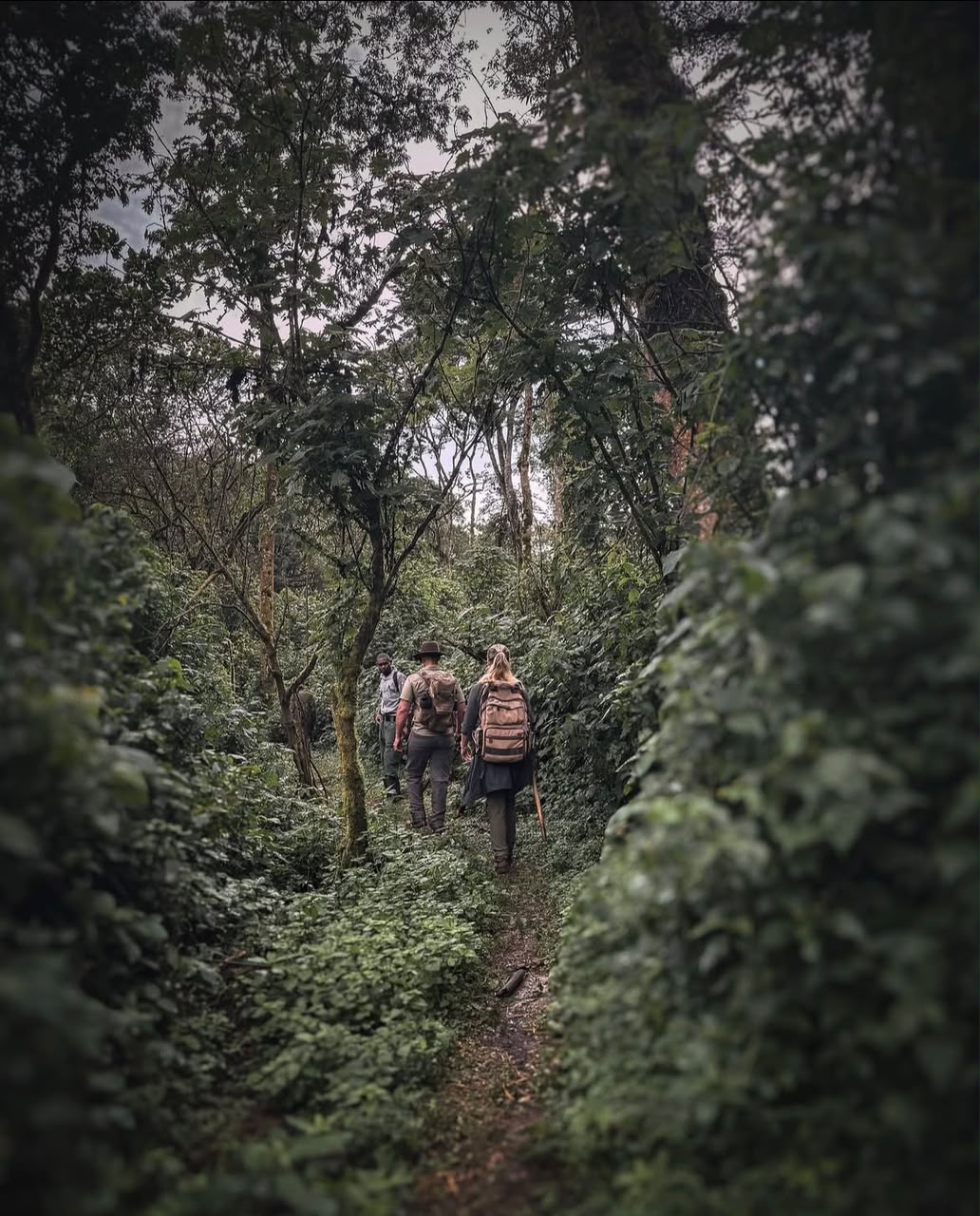
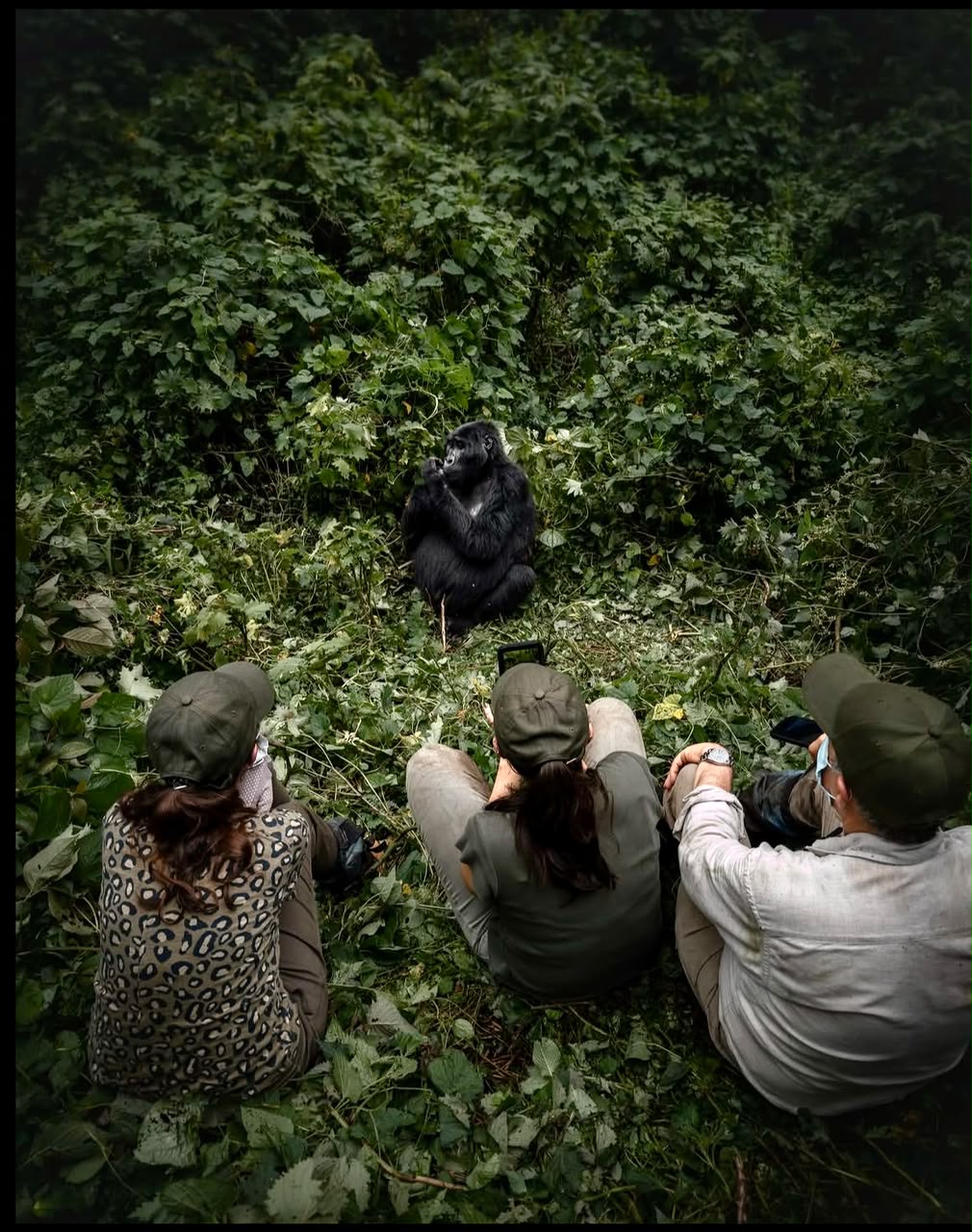
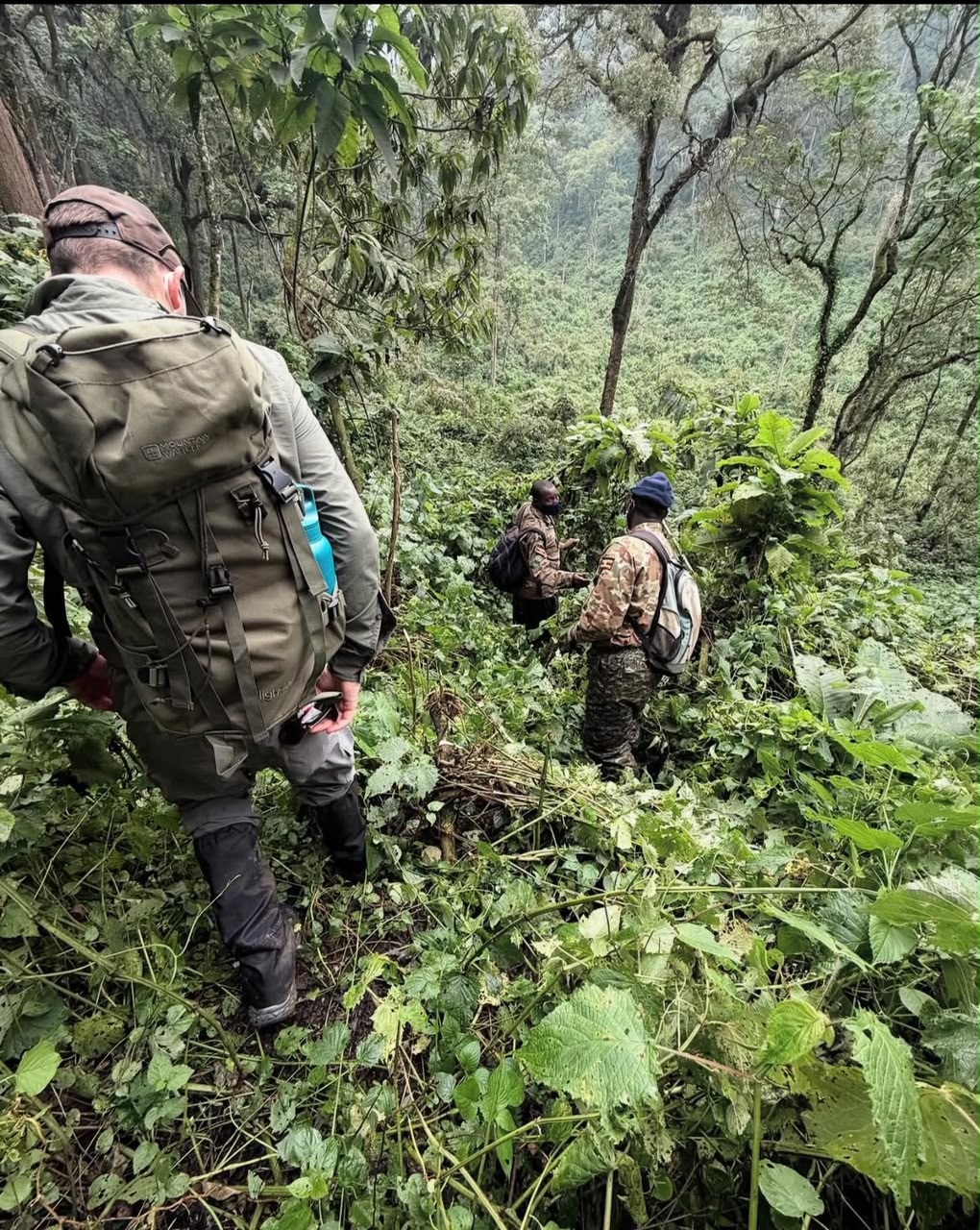
In the rainforest, you move on foot through dense, layered vegetation in a small group of eight, navigating steep volcanic slopes toward a gorilla family whose location was tracked at dawn by rangers who have followed them for years. The encounter is intimate, physically engaged, and emotionally profound. You are in the gorilla's world, on its terms, at its pace.
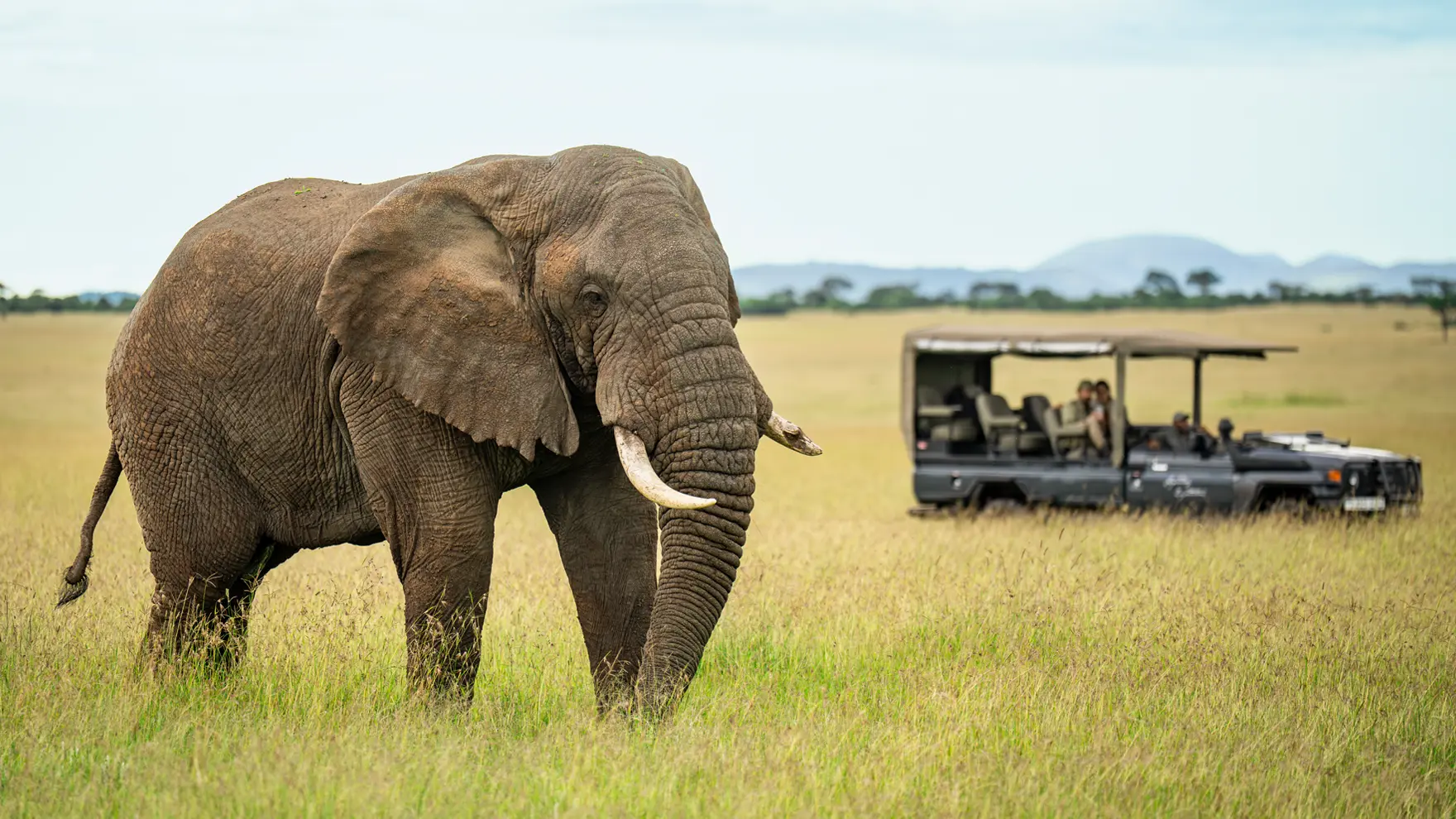
On the savannah, you are in a custom 4x4 with a pop-up roof and a naturalist guide, watching the landscape unfold across distances that cannot be measured in meters but in how far the eye can reach. A lion coalition resting in the shade of a single acacia. A column of wildebeest that stretches to the literal horizon. A cheetah that has been watching a Thomson's gazelle for forty minutes making its decision in a single explosive second.
These two experiences do not compete with each other. They complement each other and a traveler who has experienced both understands Africa in a way that neither experience alone could produce.
The single biggest mistake in multi-country safari planning is not choosing the wrong destinations it is choosing the right destinations but allocating insufficient time to each. The combination produces a collection of transits, not a journey.
The Six Best Gorilla Safari Combinations In Detail
01 Most Popular Combination Uganda + Kenya Recommended: 10–14 days · Best season: July–October |
|---|
This is the strongest first-time East Africa combination and the one we recommend most frequently to visitors experiencing the continent for the first time. Uganda provides everything that the rainforest and primate ecosystem can offer; Kenya delivers the classic savannah spectacle in a logistical framework that is among the most efficient in Africa. Suggested Route: Entebbe → Kibale Forest (chimpanzees) → Bwindi (gorillas) → Entebbe → Nairobi → Maasai Mara → Nairobi departure Uganda Delivers
Kenya Delivers
Aviation routing: Bush flight from Kihihi/Kisoro to Entebbe (EBB) → commercial connection to Nairobi (NBO) → 45-minute charter to Mara airstrip. No backtracking required. The East Africa Tourist Visa (US$100) covers Uganda and Kenya in a single application. |
02 Most Comprehensive Safari Uganda + Tanzania Recommended: 12–16 days · Best season: December–February or June–September |
|---|
For travelers who want gorillas plus Africa's most iconic wilderness landscapes, Uganda and Tanzania create a combination of extraordinary breadth. The logistics require careful planning Tanzania is large, and the parks are distributed across significant distances but regional aviation makes every connection manageable and the transitions scenic. Suggested Route: Entebbe → Bwindi (gorillas) → Entebbe → Kilimanjaro/Arusha → Serengeti → Ngorongoro → Zanzibar Uganda Delivers
Tanzania Delivers
Seasonal note: December–February catches Tanzania's calving season the most dramatic predator activity of the year while Uganda's dry season runs June–September for the most comfortable gorilla trekking. Plan your itinerary to prioritize one seasonal highlight over the other, or allow 16+ days to experience both windows. |
03 Gorillas + Safari + Beach Uganda + Tanzania + Zanzibar Recommended: 14–18 days · Best season: June–September |
|---|
This is the most naturally satisfying three-chapter structure available in East Africa and the combination that best rewards the traveler who refuses to choose between rainforest, savannah, and Indian Ocean. The movement from Bwindi's ancient forest to the Serengeti's endless plains to Zanzibar's white sand coastline is not merely geographical progression. It is an emotional arc that concludes in the most satisfying possible place. Suggested Route: Entebbe → Kibale → Bwindi → Entebbe → Kilimanjaro → Serengeti → Ngorongoro → Zanzibar The itinerary structure: primates and rainforest in Uganda (Days 1–6), wildlife and savannah in Tanzania (Days 7–12), beaches and decompression in Zanzibar (Days 13–16). Domestic flights of 45–75 minutes connect the Tanzania parks; a short flight connects the Serengeti circuit to Zanzibar. Best for: Honeymooners, luxury travelers, and anyone who wants their safari to conclude with something as extraordinary as it began from the most intimate wildlife encounter on earth to the most beautiful beach in the Indian Ocean. |
04 Short Luxury Escape Rwanda + Kenya Recommended: 9–14 days · Best season: July–October |
|---|
Rwanda's greatest competitive advantage is logistics and this combination exploits it fully. The journey from Kigali to Volcanoes National Park takes two and a half hours by road. The journey from Nairobi Wilson Airport to the Maasai Mara takes forty-five minutes by bush plane. Combined, these two destinations create the most time-efficient luxury gorilla and safari combination available two extraordinary ecosystems, accessible with minimum transit friction. Suggested Route: Kigali → Volcanoes NP (gorillas + golden monkeys) → Kigali → Nairobi → Maasai Mara → Nairobi departure Rwanda Delivers
Kenya Delivers
Aviation routing: Kigali (KGL) → Nairobi Wilson (WIL) → 45-min charter to Mara airstrip. The East Africa Tourist Visa (US$100) covers Rwanda and Kenya in a single application the cleanest visa framework of any combination on this list. |
05 Southern Africa Contrast Rwanda + South Africa Recommended: 10–14 days · Best season: June–August |
|---|
This combination pairs the high-altitude volcanic forests of Central Africa with the sophisticated private game reserves of South Africa's Greater Kruger ecosystem two worlds as different from each other as any two environments on the same continent can be. The logistics are, counter-intuitively, among the cleanest of any trans-continental combination: Kigali International Airport operates direct, daily non-stop flights to OR Tambo (JNB) in Johannesburg in approximately four hours. Suggested Route: Kigali → Volcanoes NP (gorillas) → Kigali → Johannesburg (JNB) → Sabi Sand airstrip → departure The June–August window catches South Africa's austere winter dry season when the depleted vegetation creates exceptional Big Five visibility in the Sabi Sand and surrounding reserves while simultaneously delivering dry, firm trails for comfortable gorilla trekking in Volcanoes NP. Visa framework: Rwanda Entry Visa + South Africa e Visa or visa-waiver (most Western passports). Malaria risk in the Sabi Sand reserves is low to minimal in winter; antimalarial precautions should still be discussed with your travel health physician. |
06 All-Uganda Deep Immersion Uganda Comprehensive Circuit Recommended: 8–12 days · Year-round |
|---|
For travelers who wish to experience maximum ecosystem diversity while eliminating the complexity of international border crossings, currency changes, and multi-country visa logistics, the unified Uganda circuit is unmatched. Using premium domestic aviation Aero link Uganda operates modern Cessna 208B Grand Caravans between all major park airstrips Savannah Explore Africa structures a seamless fly-in loop that visits four distinct ecosystems without a single international transit. Suggested Route: Entebbe → Murchison Falls (Nile safaris + elephant) → Kibale (chimpanzees) → Queen Elizabeth (tree-climbing lions + Kazinga Channel) → Bwindi (gorillas) → Entebbe What Uganda Includes
Logistical Advantages
Best for: Travelers wanting Africa's greatest wildlife diversity within a single, seamlessly managed country. Also the strongest value proposition Uganda's gorilla permit at US$800 leaves more budget for lodge upgrades and additional experiences. |
Aviation Routing The Infrastructure That Makes It Work
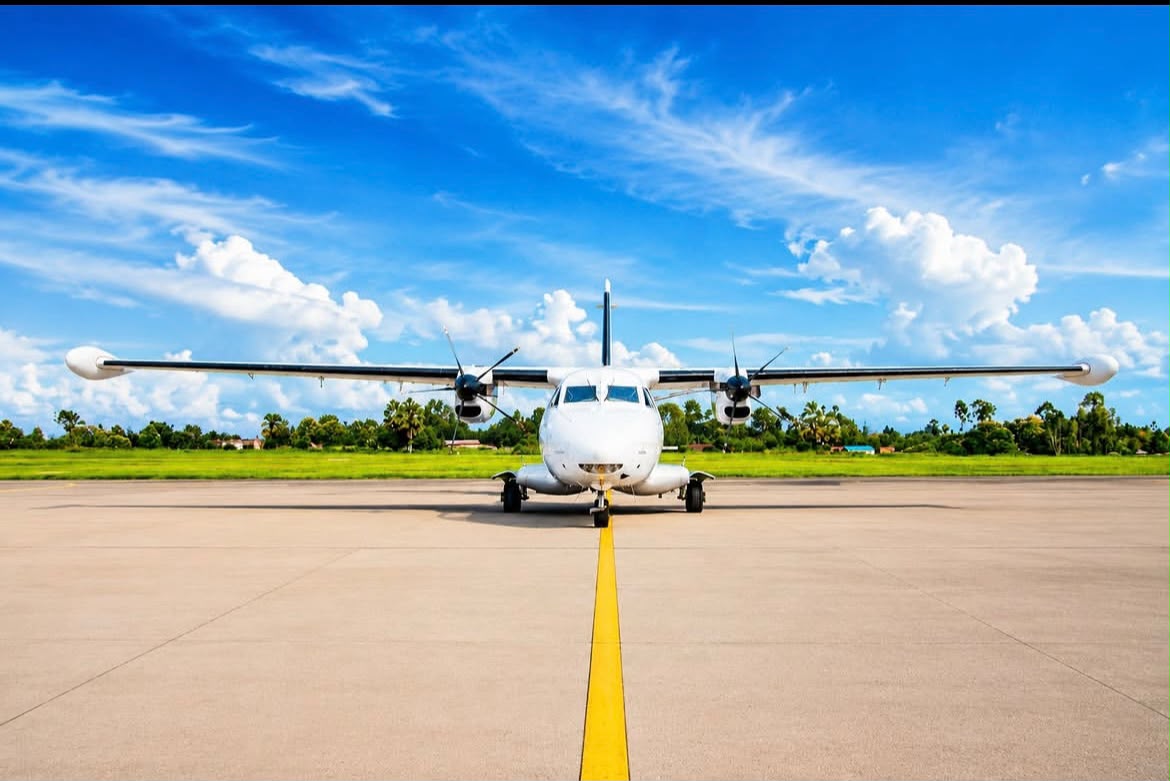
Multi-country safari logistics rest almost entirely on regional aviation and understanding the flight network is as important as understanding the wildlife calendar. The goal is never to minimize the number of flights. It is to minimize wasted travel time and eliminate the backtracking that turns a safari into a transport exercise.
East Africa Grid — Kenya + Tanzania + Rwanda + Uganda |
|---|
The East African aviation network connects the region's major safari hubs with a combination of scheduled bush flights and short-haul commercial connections that, correctly sequenced, eliminate nearly all unnecessary transit time.
Always specify soft-sided bags for domestic bush flights a hard cap of 15 kg per passenger applies, and hard-shell cases cannot fit in Cessna Grand Caravan cargo pods. Savannah Explore Africa manages luggage logistics and can arrange secure city storage for excess items. |
Visa Framework What You Actually Need
Multi-country itineraries create visa complexity that, with the right framework, is entirely manageable. The key tool for East African circuits is the East Africa Tourist Visa one of the most traveller-friendly visa instruments anywhere in the world.
Visa Requirements by Combination |
|---|
|
The Three Non-Negotiable Planning Rules
01 Decode the Seasonal Intersection Multi-country itineraries must be designed around the seasonal calendar of every destination simultaneously not just the primary one. A date that is ideal for South Africa's winter game viewing may land in Rwanda's long wet season, producing impassable mud trails. The July September window is the most universally favourable across East Africa's major circuits, aligning dry forest trekking with peak Migration crossings in the Mara and Serengeti. | 02 Build in Buffer Airport Nights Never stack an international long-haul flight and a domestic bush flight connection on the same travel day. A three-hour delay on a flight from London or New York can cause you to miss a morning bush plane to Kisoro or Kihihi that departs early due to high-altitude mountain wind constraints and cannot be rescheduled. Always include a mandatory overnight at a quality city property Nairobi, Kigali, or Entebbe before your bush circuit begins. The buffer costs one night. Missing a gorilla permit costs US$800 and potentially your entire trek. | 03 Decide: Gorillas First or Last? Both approaches work but for different reasons. Beginning with gorillas completes the most physically demanding activity while you are fresh from arrival, then allows the remainder of the safari to be progressively more relaxed. Ending with gorillas creates the most memorable finale the silverback encounter as the grand conclusion of an extraordinary journey. Our strongest recommendation for most itineraries: gorilla trekking as the final chapter. It is the experience most likely to transcend every expectation, and it deserves to be the last thing you carry home. |
|---|
Can I See Gorillas and the Great Migration on the Same Trip?
Yes and this is one of the most sought-after combinations in East African travel. The two experiences are geographically compatible, seasonally alienable, and experientially complementary in the most complete way imaginable.
The Great Migration operates on a seasonal cycle. Understanding where the herds are and therefore which country and which park to target is the fundamental planning question for any combined gorilla-migration itinerary.
Gorillas + Serengeti Uganda/Rwanda + Tanzania
| Gorillas + Maasai Mara Uganda/Rwanda + Kenya
|
|---|
The migration is not a fixed attraction in a single location. It is a moving ecosystem and your itinerary must be built around its seasonal position rather than simply adding "Serengeti" or "Maasai Mara" to a list of destinations. A September gorilla-migration combination built around the Mara River crossings is one of the greatest wildlife itineraries on earth. The same combination executed in April produces neither at its peak.
How Many Days Do You Actually Need?
This is where the most expensive planning mistakes are made and the principle is simple: more countries require more time. Trying to visit five destinations in ten days produces a holiday of transit and check-ins, not a safari.
7–9 Days Focused Combination Choose one gorilla destination plus one additional safari destination. Rwanda + Kenya is the strongest option at this length. Any more than two major destinations at this duration will feel rushed. | 10–14 Days The Sweet Spot Uganda + Kenya or Rwanda + Tanzania. Enough time for both destinations to breathe, with proper time in each national park rather than transit days dominating. Our most frequently recommended planning window. |
|---|---|
14–18 Days Comprehensive Journey Uganda + Tanzania + Zanzibar. Three distinct experiences primates, savannah, Indian Ocean with enough time in each to feel genuinely unhurried. The classic East African luxury circuit. | 18–21+ Days Grand African Circuit Uganda + Rwanda + Kenya/Tanzania. The complete East African wildlife journey — but only feasible without exhaustion at this length. Never attempt this in less than 18 days. |
The Biggest Mistake: Treating Africa Like a Checklist
Multi-country travel sounds impressive. Five countries in fourteen days. Gorillas, migration, crater, chimpanzees, beach. The itinerary reads like an extraordinary achievement before it has even happened.
But a safari should not become a checklist and this is, in our experience, the source of most disappointment on multi-destination trips. If you spend every second day packing, flying, unpacking, transferring, and checking into another lodge, you lose the very thing you came to Africa for: time in nature, unhurried, present, and genuinely there.
Our consistent recommendation is to choose two or three major experiences and build the itinerary around them with depth rather than breadth. Gorillas + Great Migration + Zanzibar is a stronger holiday than gorillas + chimpanzees + Kenya + Tanzania + Rwanda + Zanzibar crammed into ten days. Fewer destinations, more time in each, more encounters rather than more airports.
The principle: design around the experience you most want to have, then add destinations only if the time and logistics genuinely support them without compromising the quality of what you already have.
Packing for a Multi-Environment Safari
A multi-country itinerary combining rainforest, savannah, and optionally beach requires packing for environments of entirely different character but the discipline of bush aviation's 15 kg soft-bag limit means every item must justify its weight.
Gorilla Trekking | Savannah Safari | Beach (Zanzibar) |
|---|---|---|
|
|
|
Pack light for everything. Safari vehicles accommodate camera bags and small personal items; beach resorts accommodate lighter travel than forest camps. If your itinerary includes both bush aviation and beach, soft duffel bags not hard-shell cases are the only viable solution throughout the journey.
Should You Use One Safari Company for the Entire Journey?
For a complex multi-country itinerary, the answer is almost always yes with one important qualification: the company you choose must have genuine, established operational capability in every country included in your route. Not marketing coverage. Actual on-the-ground operations.
A single experienced operator coordinating your entire journey provides:
A single point of contact for every element permits, accommodation, flights, transfers, and emergency support across all countries
Integrated itinerary design that treats the journey as a single route rather than separate trips bolted together
Permit priority relationships with Uganda Wildlife Authority and Rwanda Development Board that individual booking cannot replicate
Real-time problem-solving when the inevitable logistical variations of multi-country travel occur a flight delay, a permit date change, a weather-related reroute handled by a team that knows every alternative option across the entire network
Accountability for the complete journey rather than for any single segment
The important qualification: ask specifically whether the operator has licensed, operational ground teams in each country not simply agents or referrals. A Uganda specialist who "partners" with a Kenyan company for the Mara portion of your itinerary is a different proposition from an operator with their own guides, vehicles, and lodge relationships across the entire East African circuit.
Frequently Asked Questions?
Can I see gorillas and the Great Migration on the same trip?
Yes this is one of the most spectacular combinations in East African travel. The key is timing: the most productive window for both experiences simultaneously is July–October, when Uganda's dry season makes gorilla trekking most comfortable and the Mara River crossings in Kenya or the northern Serengeti in Tanzania reach their dramatic peak. A minimum of 12 days is recommended; 14 days allows both experiences to breathe properly.
Is it better to do gorilla trekking before or after the savannah safari?
Both approaches work well the right choice depends on your flight routing and personal preference. For most itineraries, we recommend completing the gorilla trek at the end of the journey: the savannah safari allows your body to adjust to local time zones and African rhythms in the relative comfort of a vehicle, while the gorilla trek physically demanding, emotionally profound, and logistically precise delivers the most unforgettable experience as the grand finale. Arriving at Bwindi fresh and rested, having spent five days on the plains, produces the finest gorilla encounters.
What is the East Africa Tourist Visa and who does it cover?
The East Africa Tourist Visa (EATV) is a single electronic visa document costing US$100 that grants multi-entry access to Kenya, Uganda, and Rwanda for 90 days. It is applied for online via the immigration portal of the first country you enter on your itinerary. This single document eliminates three separate visa applications and covers the majority of East African multi-country circuits. Tanzania requires a separate visa; South Africa is visa-free for most Western passport holders.
Do I need a Yellow Fever certificate for a multi-country safari?
Yes if your itinerary includes travel from Kenya or Tanzania (both considered yellow fever endemic zones) into Rwanda or Uganda, border officials legally require proof of Yellow Fever vaccination via a physical Yellow Card. Secure this vaccination at a certified travel clinic at least 10 days before your departure date, and carry the physical Yellow Card in your travel documents throughout the journey. Failure to present it can result in being denied entry or being vaccinated on the spot at the border neither is an acceptable outcome for a carefully planned safari.
How many countries can I realistically combine in one safari?
For most travelers, two to three countries represents the optimal range enough diversity to create genuine contrast without the transit fatigue that undermines the experience of each destination. Three countries (Uganda + Tanzania + Zanzibar, for example) works beautifully at 14–18 days. Four countries (Uganda + Rwanda + Kenya + Tanzania) requires a minimum of 18–21 days to avoid spending more time in airports than in the wildlife areas that justify the journey. More countries require more time not as a guideline, but as a non-negotiable requirement of safari quality.
Is Uganda or Rwanda better for combining with Kenya?
Both work well for different reasons. Rwanda's combination with Kenya is the most logistically efficient the Kigali to Nairobi to Mara connection is approximately two hours total transit, and the East Africa Tourist Visa covers both countries in a single application. Uganda's combination with Kenya is richer in wildlife diversity adding chimpanzees, tree-climbing lions, and the Nile to the itinerary at a significantly lower gorilla permit cost (US$800 vs US$1,500). Choose Rwanda for shorter trips prioritising speed and luxury; choose Uganda for broader wildlife content and outstanding value.
How far in advance should I book a multi-country gorilla safari?
For peak season travel (July–October and December–February), booking nine to twelve months in advance is strongly recommended. Gorilla permits strictly limited to eight visitors per habituated family per day are the primary constraint, and peak-season dates sell out well ahead at both Uganda and Rwanda. Preferred luxury lodges across the East African circuit follow a similar booking curve. Earlier planning provides greater flexibility with permit dates, specific lodges, and regional flight connections. For multi-country itineraries of more than three destinations, twelve months is the minimum advance planning window we recommend.
Design Your Multi Country Safari
The best multi-country safari is not the one with the most destinations it is the one designed as a single, coherent journey that makes every day feel like it belongs. Tell us what you want to experience. We will build the route that delivers it.
Begin Your Journey
Your story starts
in East Africa.
Tell us your dates, your dream, and how you like to travel. We will design something extraordinary, only for you.