
The Migration
The greatest
wildlife spectacle on Earth
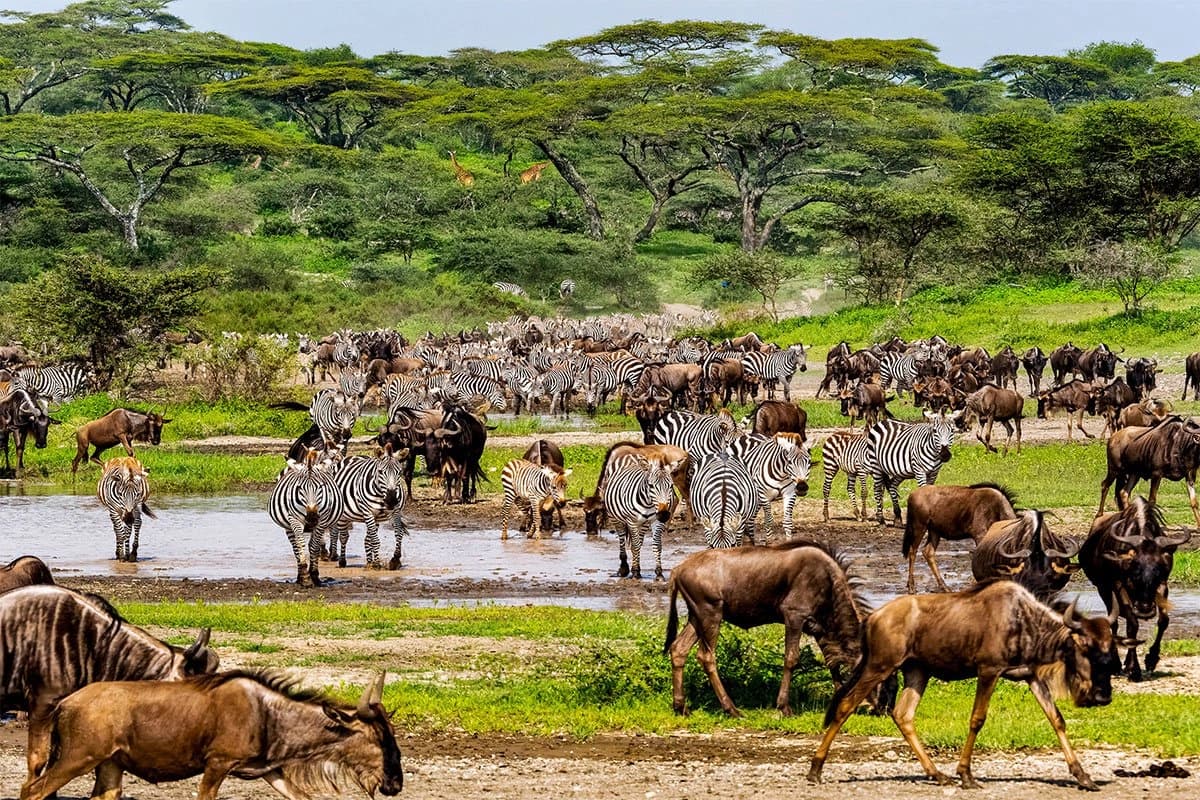
The Great Wildebeest Migration is not a single event. It is a continuous, year-round movement of 1.5 million wildebeest, 500,000 zebra and 200,000 Thomson's gazelle around the Serengeti-Mara ecosystem, a 2,900 kilometre annual circuit driven entirely by the availability of short grass. There is no beginning and no end: the animals are always moving.
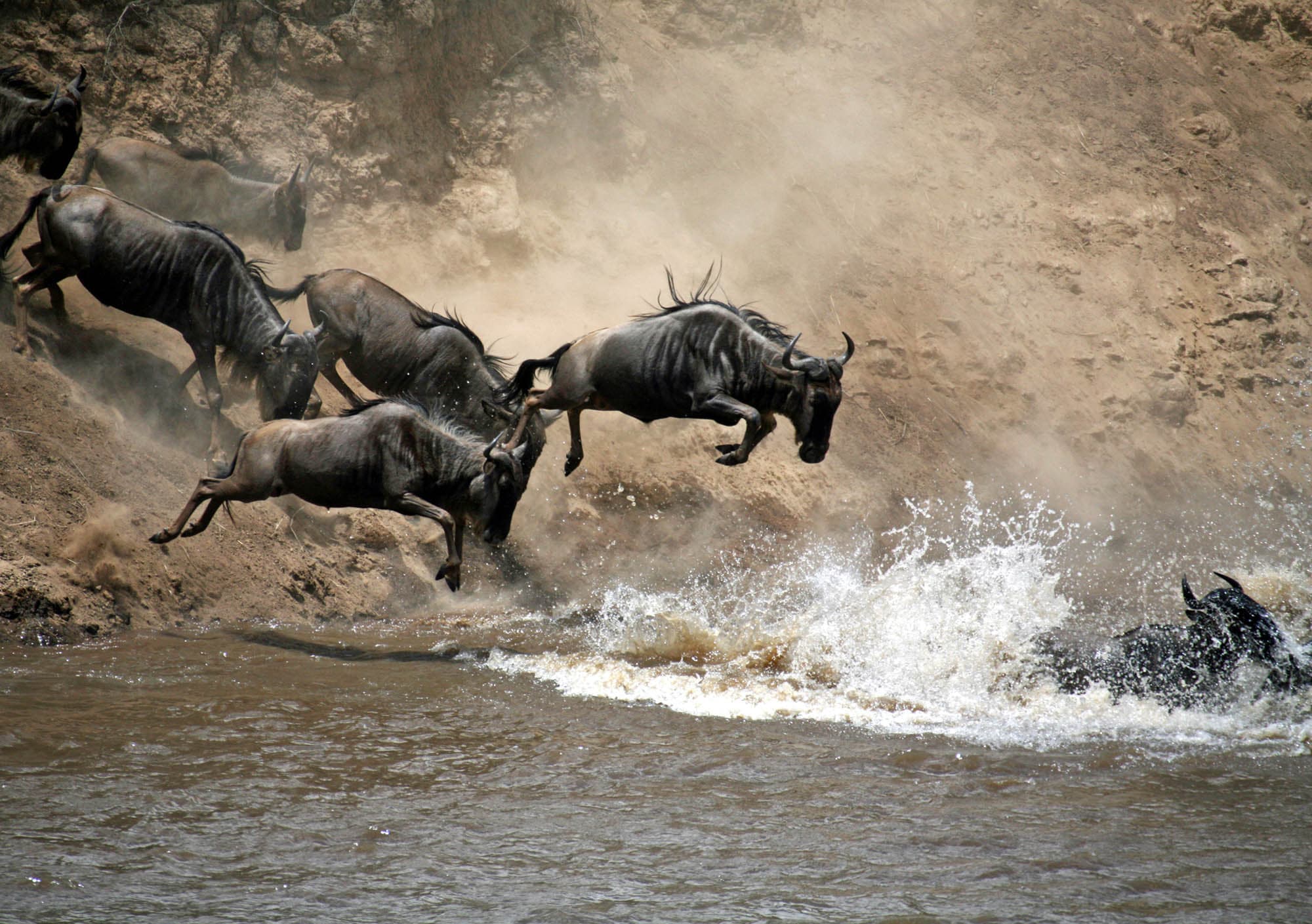
What varies by season is what the migration delivers. The Mara River crossings of July to October are the spectacle that defines the migration in most people's minds: tens of thousands of wildebeest plunging into crocodile-filled water in a chaos of spray, dust and sound. The calving season of January and February is the counterpoint: extraordinary predator density on the southern Serengeti plains, with 500,000 calves born over six weeks.
We track herd movement year-round through our guide and camp network and position every migration itinerary based on where the action is, not where it was last year. No two migration seasons are identical.
When to Go
Migration Month by Month
Locations
Where to Watch the Migration
Southern Serengeti, Calving
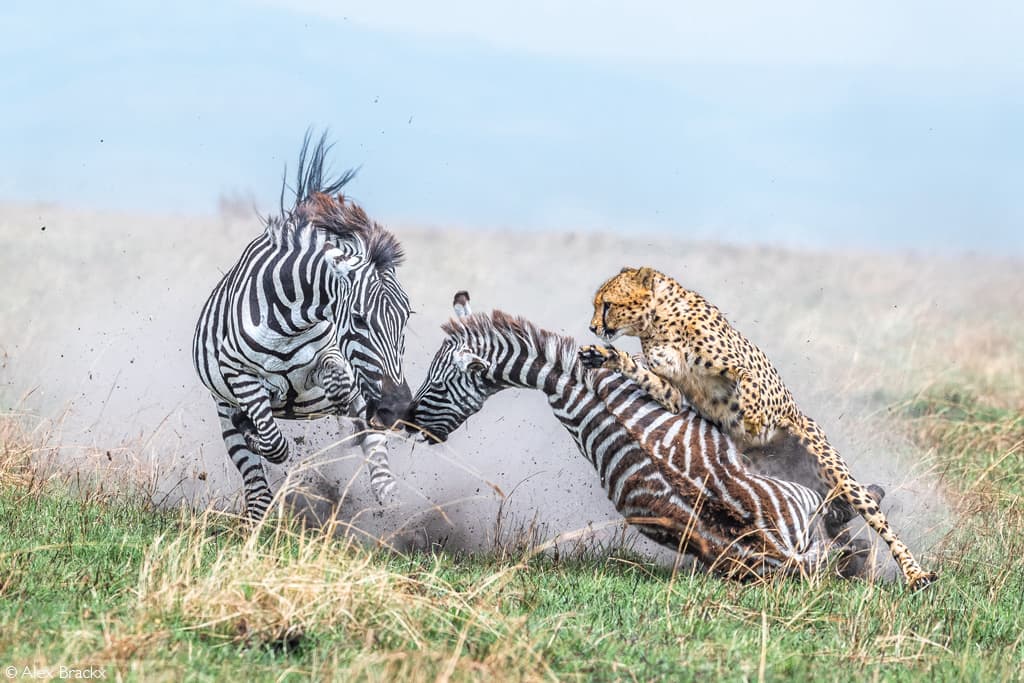
Between January and March, one of the natural world's most dramatic events takes place on the short-grass plains around Ndutu and the Ngorongoro Conservation Area boundary. Around 500,000 calves are born over a six-week period. The predator concentration during calving season is extraordinary: cheetah, lion, leopard, hyena, wild dog and jackal all converge on the plains. The Ndutu area has the highest density of predator action of anywhere in Africa during these weeks. A well-timed calving season safari produces more dramatic wildlife moments per day than almost any other single experience on the continent.
Western Corridor, Grumeti River
In May and June the leading edge of the herd reaches the western Serengeti and the Grumeti River. The Grumeti holds enormous resident Nile crocodiles that have waited all year for the crossing. The Grumeti crossings are less dramatic than the Mara, the river is narrower, the crocodiles fewer, and crossings less predictable, but the wildlife density in the western corridor during this period is extraordinary and visitor numbers are significantly lower than in the Masai Mara. For guests who want the migration experience without peak-season crowds, May and June in the western Serengeti is the best-kept secret.
Masai Mara, The River Crossings
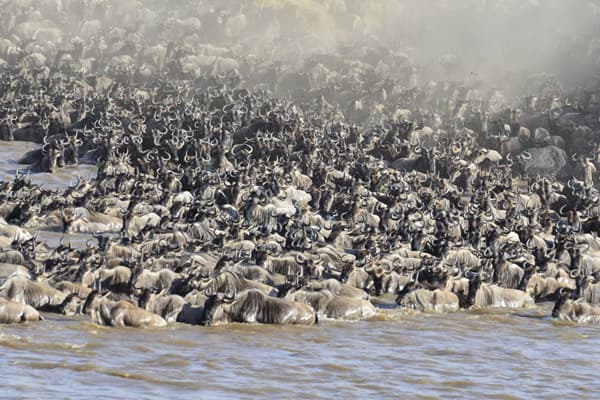
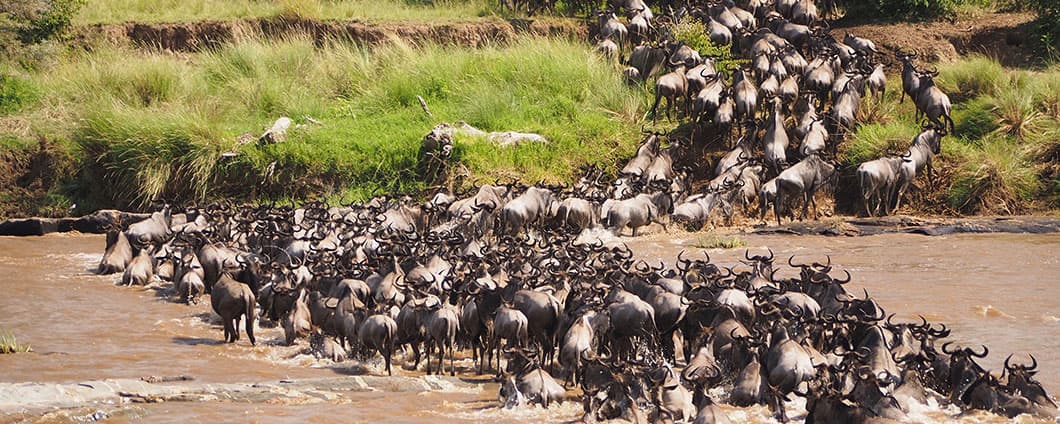
The Mara River crossing is what most people picture when they think of the Great Migration. From July through October, the herd moves between the Serengeti and the Masai Mara and must cross the Mara River multiple times. Each crossing is an event: hundreds of wildebeest standing at the bank working up the collective courage to plunge in, crocodiles waiting below the surface, chaos, spray, dust and the bodies of those that did not make it. The timing of specific crossings cannot be predicted more than a few hours in advance. The key is to be on the river at the right time, which requires a guide who monitors daily herd movement and positions you at the most active crossing points.
Northern Serengeti, The Return
In October and November the herd begins its return journey south. The northern Serengeti around Lobo and Kogatende offers excellent migration viewing during this period with fewer visitors than the Masai Mara. The Mara River crossings continue through October on the Tanzanian side and some of the finest photography of the entire migration calendar happens in the northern Serengeti in October as the herds mass on the Tanzanian side before the southward movement. November and December see the herd dispersed across the central and southern Serengeti as the rains arrive and the grass regenerates.
Our Approach
How we Position Your Safari
We Track the Herd in Real Time
The migration does not follow a fixed schedule. We maintain relationships with guides and camp managers across the Mara and Serengeti ecosystems year-round and use real-time information to position you correctly. The difference between arriving two weeks early and arriving at the right moment can be the difference between missing the river crossings entirely and witnessing the most dramatic wildlife spectacle in the world. This intelligence is what our seasonal timing expertise delivers.
The Crossing Cannot Be Predicted, Only Positioned For
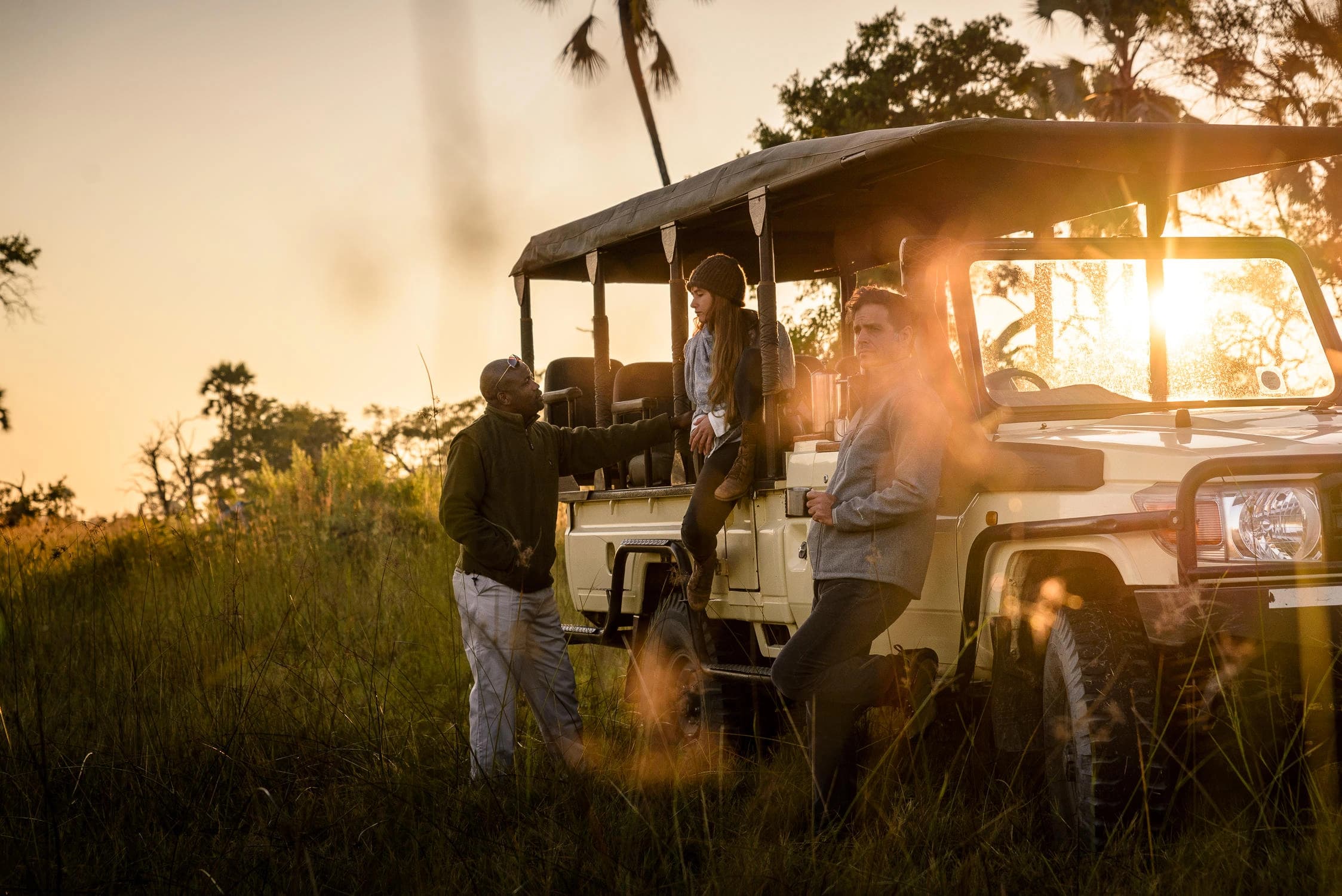
Individual river crossings cannot be predicted with precision. Herds will sometimes approach the river and then turn away without crossing. They may cross multiple times in one day or not at all for several days. The approach is to be at the river early and stay late. Private vehicles that do not have to return to camp for group lunches or fixed schedules consistently see more crossings than shared vehicles. We use private game drives as standard for all migration itineraries.
The Calving Season Rivals the Crossings
Ask any experienced East Africa guide and most will tell you the calving season in January and February is as spectacular as the Mara River crossings, and less visited. The combination of newborn calves, desperate mothers and the highest predator concentration anywhere in Africa produces hour after hour of raw, unscripted wildlife drama. The photography is extraordinary. We recommend calving season to photographers in particular and to anyone who has already seen the river crossings.
Accommodation Positioning Matters Enormously
During peak season (July to September) the Masai Mara has over 70 camps and lodges. The difference in experience between a camp positioned on the Mara River in the heart of the crossing activity and a camp 40 kilometres away is the difference between arriving at crossings quickly and arriving after the crossing has finished. We position every migration itinerary based on where the herd is and which specific river crossing points are most active.
Gallery
Expert Advice
Migration Tips
Book One Year Ahead
Peak migration camps along the Mara River in July to September sell out 10 to 12 months in advance. The specific camps that deliver the best crossing access, those positioned within 15 minutes of the most active crossing points, sell out first. We begin migration bookings for the following year in October and November. The best positions go to the earliest committed bookings.
Allow Enough Days
A minimum of four nights in the Mara is needed to have a reliable chance of witnessing a river crossing. Three nights is possible but tight. Five or six nights at the Mara is ideal if your schedule permits, with additional time in the Serengeti for context, predator action and the broader ecosystem. The migration experience is not just the crossing, it is also the landscape, the herds on the plains and the extraordinary predator density.
Go in Multiple Months
The most complete migration experience is seeing both calving season (January/February) and the river crossings (July/August/September). Very few guests do both on a single trip but those who return for a second experience almost always choose the opposite season. The calving season and the Mara crossings are completely different experiences and each is extraordinary.
Camera Setup for Crossings
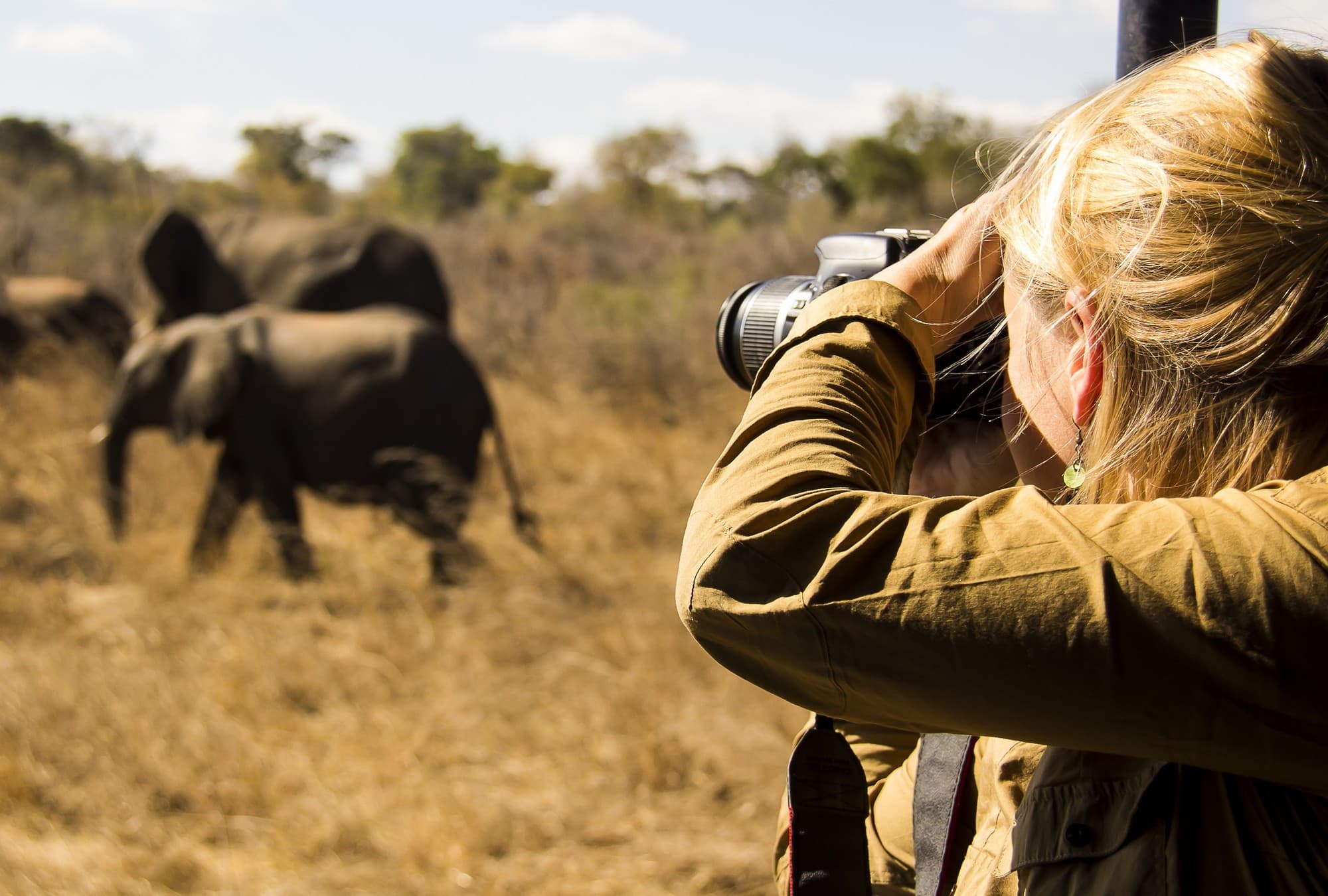
The Mara River crossing is among the most challenging wildlife photography situations in East Africa. Fast movement, spray, dust, unpredictable animal direction and high contrast between dark water and bright sky demand specific settings. Shutter priority at 1/1600s minimum, ISO set to auto, continuous autofocus with animal tracking enabled. A 100-400mm zoom covers most crossing positions. Bring two camera bodies if you have them: the crossing sequence develops faster than you can change lenses.
Spend Time on the Plains
The migration is not only the river crossing. The sight of 200,000 wildebeest spread across the Serengeti or Mara plains is one of the most extraordinary images in African wildlife viewing and requires only driving to the right position in the right month. Spend mornings on the open plains before working toward the river in the afternoon when crossing activity peaks. The afternoon light on the plains with the herd is as extraordinary as any crossing photograph.
Consider Northern Serengeti
The northern Serengeti around Kogatende and Lamai Wedge offers Mara River crossings on the Tanzanian side at significantly lower visitor density than the Kenyan Masai Mara. The camps are fewer, the crossing points less crowded and the scenery arguably more dramatic. For guests who want the migration experience without peak-season vehicle concentrations at crossing points, northern Serengeti from September to November is our strongest recommendation.
FAQ
Frequently Asked Questions
Continue Exploring
Related Experiences
Plan Your Safari
Time the Migration Precisely
We track herd movement year-round. Tell us your travel window and we will position you at the peak event for your specific dates.